
How Group Chats Replaced Social Media
The internet is becoming smaller again
For years, social media was built around sharing everything publicly.
People posted vacation photos, daily updates, opinions, and milestones for hundreds—or even thousands—of followers. The goal often seemed to be reaching the largest audience possible.
Today, that behavior is changing.
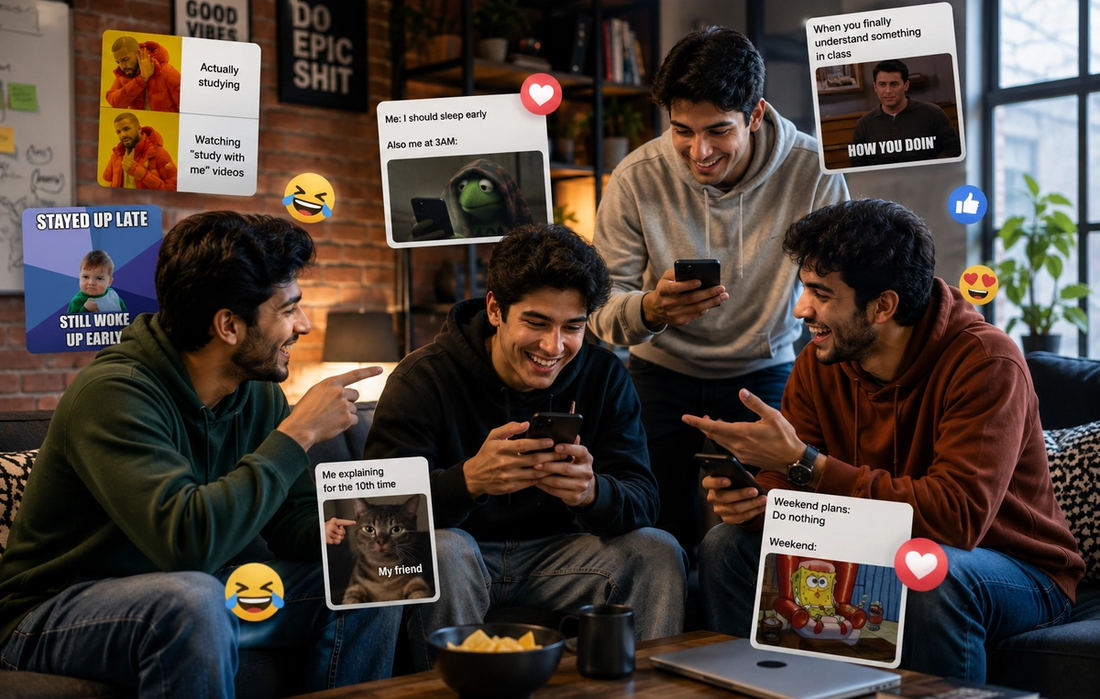
More conversations are moving into private group chats on messaging apps, where people share photos, jokes, news, recommendations, and everyday moments with a handful of friends instead of the entire internet.
In many ways, the online world is becoming more personal again.
People want conversations, not performances
Posting publicly can sometimes feel like standing on a stage.
People think about captions, reactions, comments, and how a post might be perceived by colleagues, relatives, or strangers. Even casual updates can begin to feel like performances rather than genuine conversations.
Group chats remove much of that pressure.
Instead of creating content for an audience, people simply talk to people they already know. Messages are often spontaneous, informal, and authentic because they aren’t designed to impress anyone.
For many users, that feels far more natural than maintaining a carefully curated online profile.
Sharing has become more personal
Think about the last funny video or interesting article you saw online.
Instead of reposting it publicly, there’s a good chance you sent it directly to a friend or dropped it into a family or work group chat.
This type of sharing has become incredibly common.
Rather than broadcasting everything to hundreds of followers, people increasingly choose to share content with the specific people they know will appreciate it.
That makes conversations feel more meaningful and often creates stronger connections than a public post that receives dozens of quick likes.
Group chats move information surprisingly fast
Private conversations may seem smaller, but collectively they spread information remarkably quickly.
A funny meme appears on one platform, someone shares it in a group chat, another person forwards it to a different group, and within hours thousands of separate conversations are discussing the same topic.
Recommendations for restaurants, travel destinations, products, podcasts, or television shows often spread this way as well.
Instead of relying on public influencers alone, many people now trust suggestions that come directly from friends, colleagues, or family members.
Personal recommendations often carry more weight than content from strangers online.
Communities are becoming smaller but stronger
Social media connected billions of people, but it also exposed users to endless opinions, arguments, and information overload.
Many people now prefer smaller digital spaces where conversations feel more familiar and respectful.
A family group chat, a neighborhood community, a gaming group, or a circle of close friends often provides a stronger sense of belonging than a massive public platform.
These smaller communities allow people to share more openly because they already know the people they’re talking to.
The internet isn’t necessarily becoming less social—it’s becoming more selective.
Public platforms still matter
This doesn’t mean social media is disappearing.
Public platforms remain important for discovering new creators, following news, learning new skills, and connecting with broader communities.
Many people first encounter interesting content on social media before sharing it privately with friends.
In that sense, public platforms increasingly act as discovery engines, while group chats become the place where people actually discuss what they’ve found.
The two forms of communication now complement each other rather than compete directly.
Privacy is becoming more valuable
Another reason for the shift is that people are becoming more aware of their digital footprint.
Posts made publicly can remain online for years and may be seen by employers, schools, or complete strangers. Group chats feel more temporary, more personal, and more private, even though it’s still wise to remember that digital conversations can always be shared.
Many users are choosing spaces where they feel more comfortable expressing themselves without the pressure of a permanent public audience.
As concerns about privacy continue to grow, smaller conversations are becoming increasingly appealing.
The future of social media may be more social than ever
Ironically, as social media grew larger, many people began craving smaller, more personal interactions.
Group chats have become the place where friendships are maintained, plans are made, jokes are shared, and everyday moments are exchanged without worrying about algorithms or public attention.
Public social media isn’t going away, but its role is changing. Increasingly, it’s where people discover ideas, while private conversations are where those ideas become meaningful.
The future of online communication may not be about reaching the biggest audience. It may be about sharing the right moments with the people who matter most.