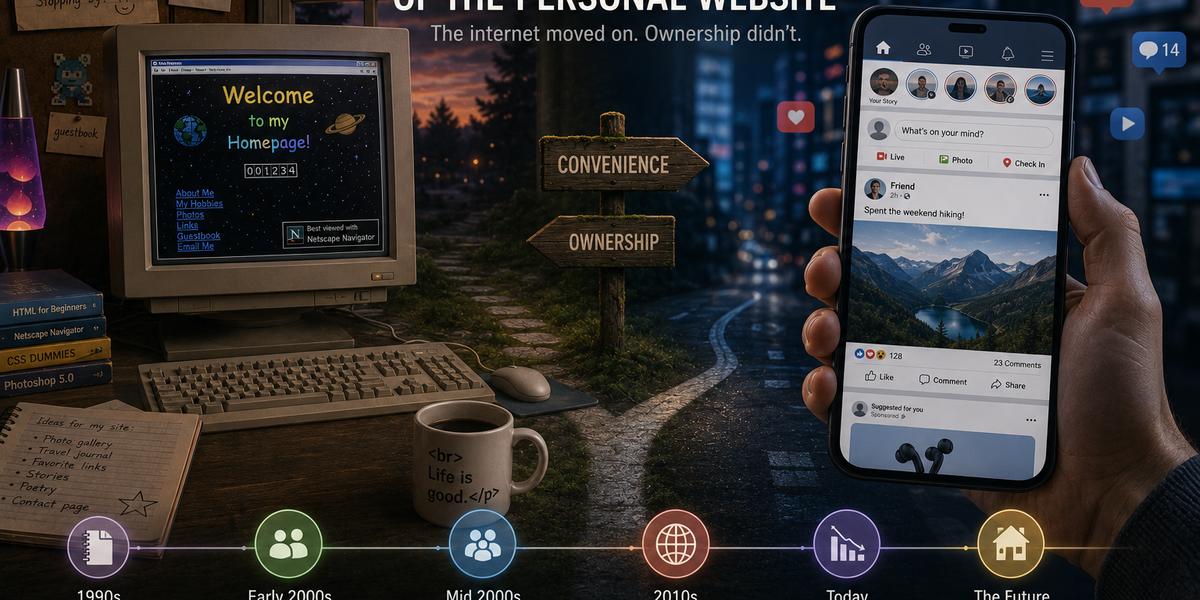
The Quiet Death of the Personal Website
Once, everyone wanted a place of their own online
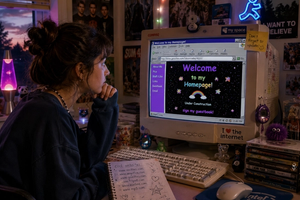
In the early days of the internet, having a personal website felt like owning a small piece of the digital world.
People created simple pages to write about their hobbies, share travel photos, publish essays, showcase artwork, or simply introduce themselves. The designs were often basic, the layouts imperfect, and the content deeply personal.
There were no algorithms deciding who would see your work and no pressure to chase likes or followers. Your website was your space, and you decided what belonged there.
Today, personal websites still exist—but they’re far less common than they once were.
Social media made publishing effortless
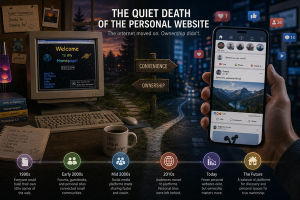
One of the biggest reasons personal websites declined is convenience.
Building and maintaining a website takes time. You need a domain name, hosting, updates, and at least a basic understanding of how websites work. Social media changed that completely.
Instead of creating an entire website, people could open an account in minutes and instantly share photos, thoughts, videos, and links with a ready-made audience.
Publishing became easier, faster, and more interactive.
For many people, social media replaced the need for a personal website almost overnight.
The audience moved to platforms
A website is only valuable if people visit it.
As billions of users gathered on social media platforms, that’s where conversations, communities, and attention naturally followed. Instead of asking friends to visit a personal homepage, people simply shared updates where everyone already spent their time.
This created a powerful network effect.
The more people joined social platforms, the more useful they became. Meanwhile, many personal websites quietly stopped being updated because their owners found larger audiences elsewhere.
The internet shifted from millions of independent websites to a handful of platforms where most online interactions now take place.
What we gained—and what we lost
Social media brought undeniable benefits.
It made publishing accessible to almost everyone, helped creators reach global audiences, and allowed communities to form around shared interests regardless of geography.
But something changed along the way.
Personal websites reflected individual personalities. They weren’t limited by character counts, standardized profiles, or recommendation algorithms. People experimented with layouts, colors, writing styles, and creative projects in ways that felt unique.
Today’s online profiles often look remarkably similar because they’re built within the same templates and design systems.
As the internet became easier to use, it also became more standardized.
Personal websites never completely disappeared
Although they’re less common, personal websites continue to play an important role.
Writers publish blogs. Designers showcase portfolios. Developers highlight projects. Researchers share publications. Entrepreneurs build professional brands, while photographers and artists display their work in ways that social media can’t easily replicate.
Unlike social media profiles, personal websites give creators complete control over how their work is presented.
There are no changing algorithms deciding who sees a post, and the content isn’t surrounded by advertisements or competing updates.
For many professionals, a personal website remains one of the few places they truly own online.
Newsletters and blogs are bringing ownership back
Interestingly, some creators are moving away from relying entirely on social media.
Newsletters, independent blogs, podcasts, and subscription-based publishing platforms have become increasingly popular because they allow creators to build direct relationships with their audiences.
Instead of depending on algorithms to distribute content, they communicate with readers more directly.
This shift reflects a growing desire for greater independence and more control over creative work.
While it isn’t a return to the early internet, it does echo some of the same ideas about digital ownership.
The future may be more balanced
It’s unlikely that personal websites will ever dominate the internet the way they once did.
Social media offers convenience, discovery, and interaction that independent websites can’t easily match. For everyday sharing, it’s simply the easier option.
At the same time, more people are recognizing the value of owning at least one digital space that isn’t controlled by a platform’s changing rules.
A personal website doesn’t have to replace social media. Instead, it can serve as a permanent home for your work while social platforms help people discover it.
Owning your corner of the internet still matters
The decline of the personal website wasn’t caused by a single event. It happened gradually as social media made sharing faster, simpler, and more connected.
Yet the idea behind the personal website remains surprisingly relevant.
Having a place online that reflects your interests, your work, and your voice—without algorithms shaping how it’s presented—offers something increasingly rare on today’s internet: ownership.
The personal website may no longer be the center of online life, but it hasn’t disappeared. For many people, it’s quietly becoming something even more valuable—a space that’s truly their own in a digital world increasingly built on rented platforms.