How a Simple Idea Becomes a Real Product
Every product starts with someone noticing a problem
It’s easy to look at a successful product and assume it began with a brilliant flash of inspiration. In reality, most products don’t start with a groundbreaking invention—they start with an everyday problem.
Someone gets frustrated by a task that takes too long. They notice something that’s confusing, expensive, inconvenient, or simply missing. Instead of accepting it, they begin asking a simple question: “What if there were a better way?”
That question is often the first step toward creating a product.
Whether it’s a smartphone app, a kitchen gadget, a piece of software, or a new type of backpack, the journey usually begins with solving a real problem for real people.
Good ideas are tested before they’re built
Having an idea is exciting, but not every idea becomes a successful product.
Before investing time and money into development, creators usually ask an important question: Do other people actually want this?
This often involves talking to potential customers, researching competitors, reading reviews of existing products, and identifying what people still find frustrating.
Sometimes the research confirms the opportunity. Other times, it reveals that the problem isn’t significant enough or that another solution already meets most people’s needs.
Testing an idea early helps avoid building something nobody wants.
The goal isn’t to prove the idea is perfect—it’s to learn whether it’s worth pursuing.
The first version is rarely the final version
One of the biggest misconceptions about product development is that the first version has to be perfect.
In reality, successful products usually begin with a simple prototype or minimum viable product (MVP). This early version includes only the core features needed to solve the main problem.
For physical products, that might be a basic model made from inexpensive materials. For software, it may be a simple app with limited functionality.
The purpose isn’t to impress everyone. It’s to gather feedback from real users.
Early testing often reveals unexpected problems, confusing features, or entirely new ideas for improvement.
Nearly every successful product has gone through multiple revisions before reaching the version customers know today.
Customer feedback shapes the final product
Once people begin using a product, they quickly discover things its creators never anticipated.
Some features become favorites. Others go unused. Certain designs turn out to be confusing, while completely unexpected problems appear.
Rather than seeing criticism as failure, successful companies treat customer feedback as one of their most valuable resources.
Reviews, surveys, interviews, customer support requests, and usage data all help identify what needs to change.
This process of listening, improving, and testing again continues throughout the product’s life—not just before launch.
Many of the products people use every day look very different from their original versions because they evolved through continuous feedback.
Building the product is only half the job
Even an excellent product won’t succeed if nobody knows it exists.
After development comes manufacturing or deployment, branding, marketing, pricing, customer support, and distribution.
Businesses need to explain what problem the product solves, why it’s different from existing alternatives, and who will benefit most from using it.
For digital products, this may involve app stores, websites, and online advertising. Physical products also require packaging, shipping, inventory management, and retail partnerships.
Creating a product is an achievement—but bringing it successfully to customers requires an entirely different set of skills.
Improvement never really stops
Many people imagine product development ending on launch day.
In reality, that’s often when the next stage begins.
Software receives updates, security improvements, and new features. Physical products are redesigned to improve durability, reduce costs, or respond to customer feedback. Companies monitor reviews, analyze sales, and continue refining their products to stay competitive.
Consumer expectations also change over time.
Features that once seemed innovative eventually become standard, while new technologies create opportunities for entirely different solutions.
The most successful products continue evolving long after their initial release.
Great products solve problems better than the alternatives
The biggest lesson from successful product development is that innovation isn’t always about inventing something completely new.
Many of the world’s most popular products weren’t the first of their kind. Instead, they were simpler, faster, more affordable, easier to use, or better designed than what already existed.
The products people remember are usually the ones that make everyday life a little easier.
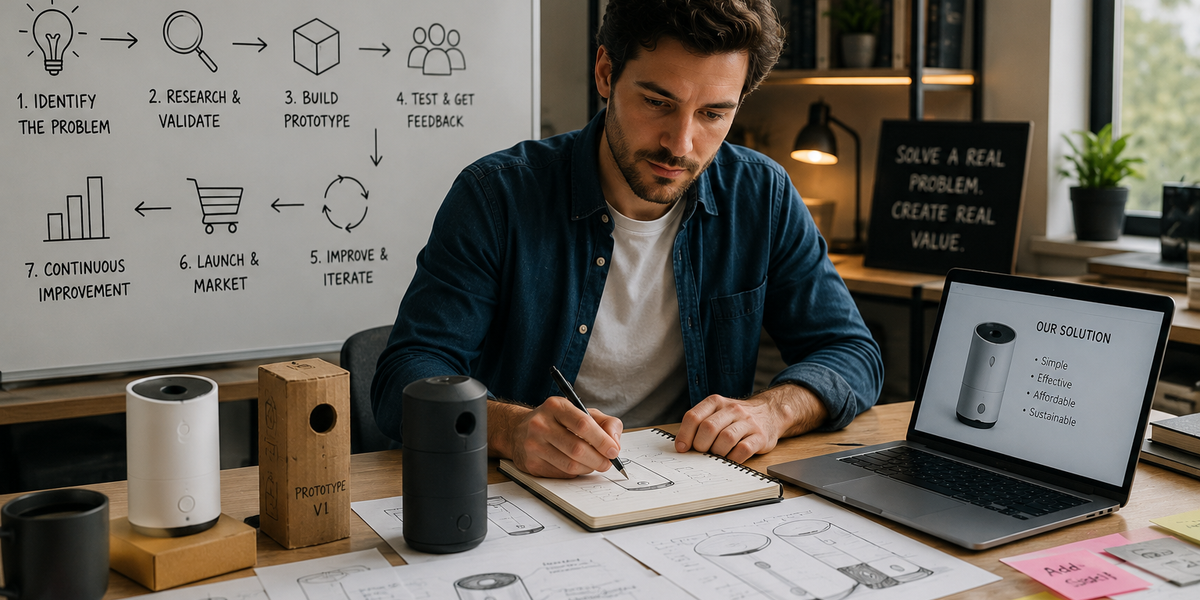
Every successful product follows a similar journey: identify a real problem, test the idea, build a simple version, gather feedback, improve continuously, and make it easy for customers to understand its value.
Behind every product on a store shelf or app on your phone is a long process of learning, experimenting, and refining. What begins as a simple idea often becomes something much bigger—not because it was perfect from the start, but because its creators were willing to improve it step by step.